How a Kids Vitamins Gummies Manufacturer Supports Growing Brands in the Supplement Industry comes down to turning an untested formula into a compliant, repeatable product. A specialized production partner handles formulation science, quality assurance, regulatory documentation, packaging integrity, and production scaling as one connected workflow. Each stage determines whether a pediatric gummy reaches retail shelves with the declared dose, the intended texture, and a full paper trail.
What Happens Between a Formula Idea and a Pallet of Finished Gummies?
Formulation and R&D Support
Contract manufacturing begins with technical teams who guide brands through active ingredient selection, pediatric dosing targets, and nutrient synergy. Pairing vitamin D with K2, or zinc with vitamin C, is evaluated for compatibility inside a gummy matrix rather than a capsule. Private label gummy vitamins typically start as lab-scale trials and pilot batches. These runs measure active ingredient uniformity, dissolution behavior, and bioavailability before any commercial tooling is committed.
Production Stages and Scale-Up Risk
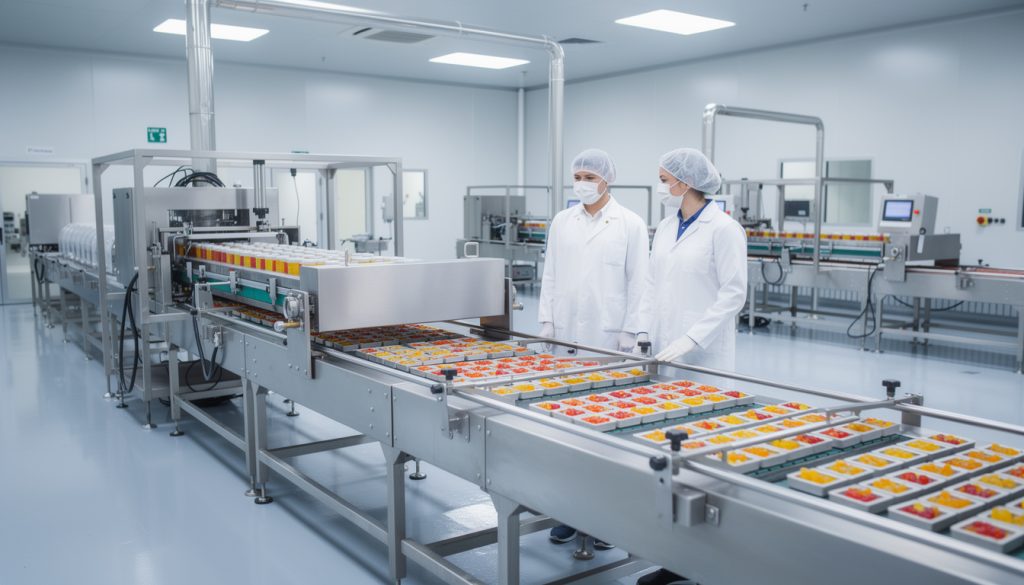
Commercial production follows a fixed sequence: raw material pre-weighing, batch cooking, depositing into molds, controlled curing in drying tunnels, surface polishing, and bottling. A recipe that performs well on a bench can deform or fail at volume because cooling rates and depositing speeds change with batch size. Pilot data therefore guides parameter adjustments before the first full run. Lead times depend on production scheduling, ingredient availability, and testing windows, so inventory planning is usually built around reorder cycles rather than single orders.
Pectin Versus Gelatin: Choosing the Base
The base sets the thermal behavior, bite, and dietary positioning of the finished product. Pectin is a plant-derived polysaccharide that forms gels in the presence of sugar and acid, which explains its use in fruit-based confectionery. Pectin gummies tolerate ambient heat in warehouses and trucks better than gelatin gummies, which soften at lower temperatures because animal collagen gels melt more easily.
| Attribute | Pectin gummies | Gelatin gummies |
|---|---|---|
| Source | Fruit-derived, plant-based | Animal collagen |
| Heat resistance in transit | Higher | Lower, softens sooner |
| Texture | Short, clean bite | Elastic, chewy |
| Dietary fit | Vegan and clean-label friendly | Excludes vegetarian and some religious diets |
Taste masking is the other sensory challenge. Iron, zinc, and herbal extracts carry bitter or metallic notes that excess sugar would otherwise cover. Formulators usually rely on acid balancing, fruit-derived flavor systems, and encapsulated actives. Natural colorants such as spirulina or carrot extract suit clean-label expectations, though pH and light exposure can shift their shade during storage.
Quality Systems Behind a Safe Pediatric Gummy
Facility Standards and Hazard Control
A GMP compliant facility relies on filtered air, separated hygiene zones, and scheduled equipment sanitation cycles. A documented HACCP plan identifies where biological, chemical, or physical hazards could enter the process and assigns a control to each point. An allergen control program adds segregation, changeover cleaning, and verification swabs so that residues from one product do not reach another.
In-Process Checks and Release Testing
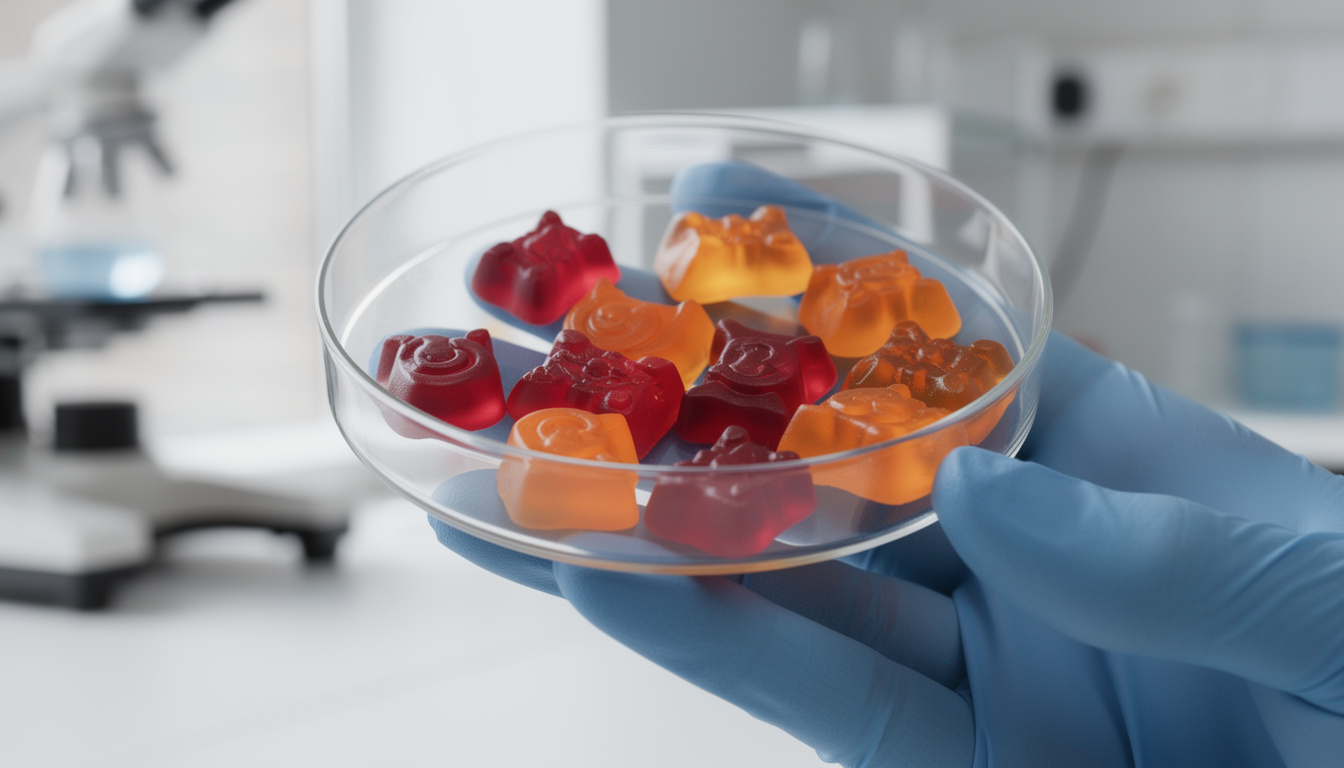
In-process quality control tracks Brix, pH, deposit weight, and moisture during each batch. Deviations are corrected while the lot is still in production. Finished product testing then confirms identity and potency. Microbial testing covers yeast, mold, and pathogens, and heavy metals testing screens for lead, arsenic, cadmium, and mercury. A lot is released only when every result falls within specification.
Common Mistakes in Potency and Shelf Stability
Potency overage is the most frequently misunderstood element. Vitamin C and B-complex vitamins degrade during cooking and storage, so formulas add a calculated excess to keep the label claim accurate at expiration. Skipping this step produces gummies that meet the claim on the day of manufacture and fall short months later. Stability testing and shelf-life validation, run at real and accelerated conditions, are the only reliable way to confirm the overage was set correctly.
Physical defects arise from similar oversights. Moisture migration causes sticky clumping, sugar bloom leaves a crystalline film, and case hardening forms a tough shell around a soft center. Controlled drying and conditioning rooms address these problems by bringing water activity to a target below about 0.6, which limits both microbial growth and textural drift.
Scenario: A Pallet Sits on a Summer Loading Dock
Packaging decides whether a well-made gummy survives distribution. Rigid HDPE or PET bottles resist crushing and moisture better than multi-layer barrier pouches, although pouches reduce weight and shipping volume. Child-resistant packaging closures are standard for pediatric products to prevent accidental ingestion. Induction seals, desiccants, and oxygen scavengers protect texture and potency against humidity inside the container.
Outside the bottle, temperature and humidity mapping of warehouses, trailers, and distribution points reveals where heat accumulates. Insulated pallet wraps and seasonal shipping schedules reduce the risk of melted, fused product and the returns that follow.
Documentation, Order Size, and Choosing a Partner
Retailer onboarding and third-party audits depend on paperwork. A production partner working under 21 CFR Part 111 supplies the Master Manufacturing Record, batch records for every lot, and a lot-specific Certificate of Analysis (COA). Traceability systems link each ingredient lot to finished units, which shortens product investigations and recalls.
Unit cost is shaped by premium functional actives, organic sweeteners, specialized molds, and release testing. When evaluating a kids vitamins gummies manufacturer, minimum order quantities are compared against commercial batch sizes. An emerging brand often starts at a smaller run and expands capacity in stages as demand is confirmed.
Why are pectin gummies often chosen for children's supplements?
Pectin is plant-based, suits vegetarian and vegan households, and holds its shape better in warm supply chains than gelatin.
What is potency overage?
Potency overage is a calculated surplus of a vulnerable vitamin added to the formula so that the label claim remains accurate through the end of shelf life.
Which tests are normally required before a lot is released?
Release usually includes potency, microbial testing, and heavy metals testing, with the results recorded in a Certificate of Analysis.
Why is child-resistant packaging used for gummy vitamins?
Gummies resemble candy, so child-resistant closures reduce the chance of unintended ingestion of vitamins and minerals.
About the Business
Maya Plus is a leading manufacturer of high-quality food supplement and vitamin gummies, offering private label solutions tailored to health-conscious consumers, retailers, and businesses. The company specializes in innovative gummy formulations for men, women, kids, sports nutrition, and beauty applications. For more information, the Maya Plus website outlines its development and manufacturing services.